The Berklee Internet Radio Network: 1 Student Radio 2 Special Events 3 Alumni Programming 4 Famous Alumni Tracks 5 Berklee International

News

Events

Music Therapy Department

Welcome to the Music Therapy Department at the Berklee College of Music!

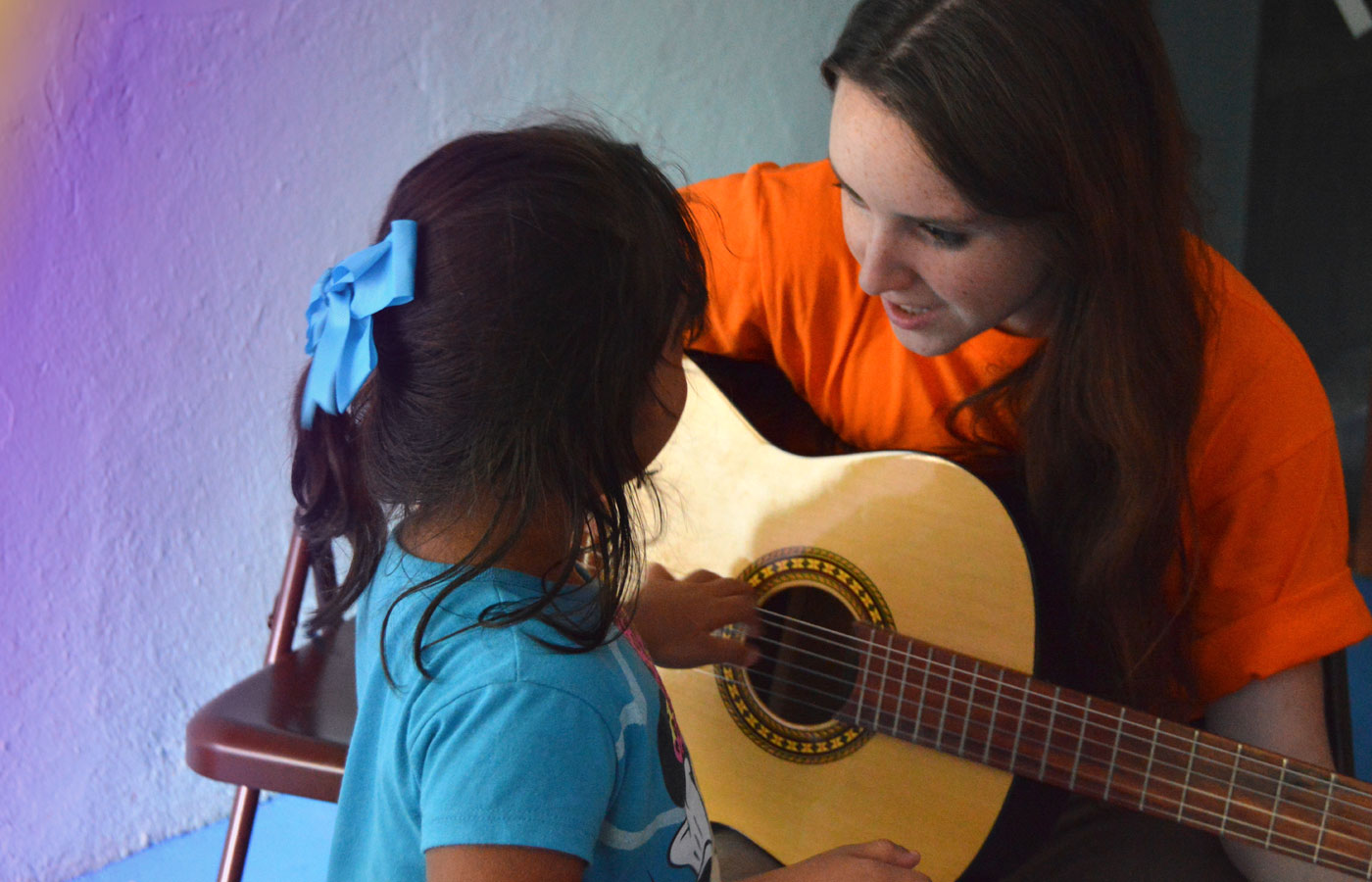
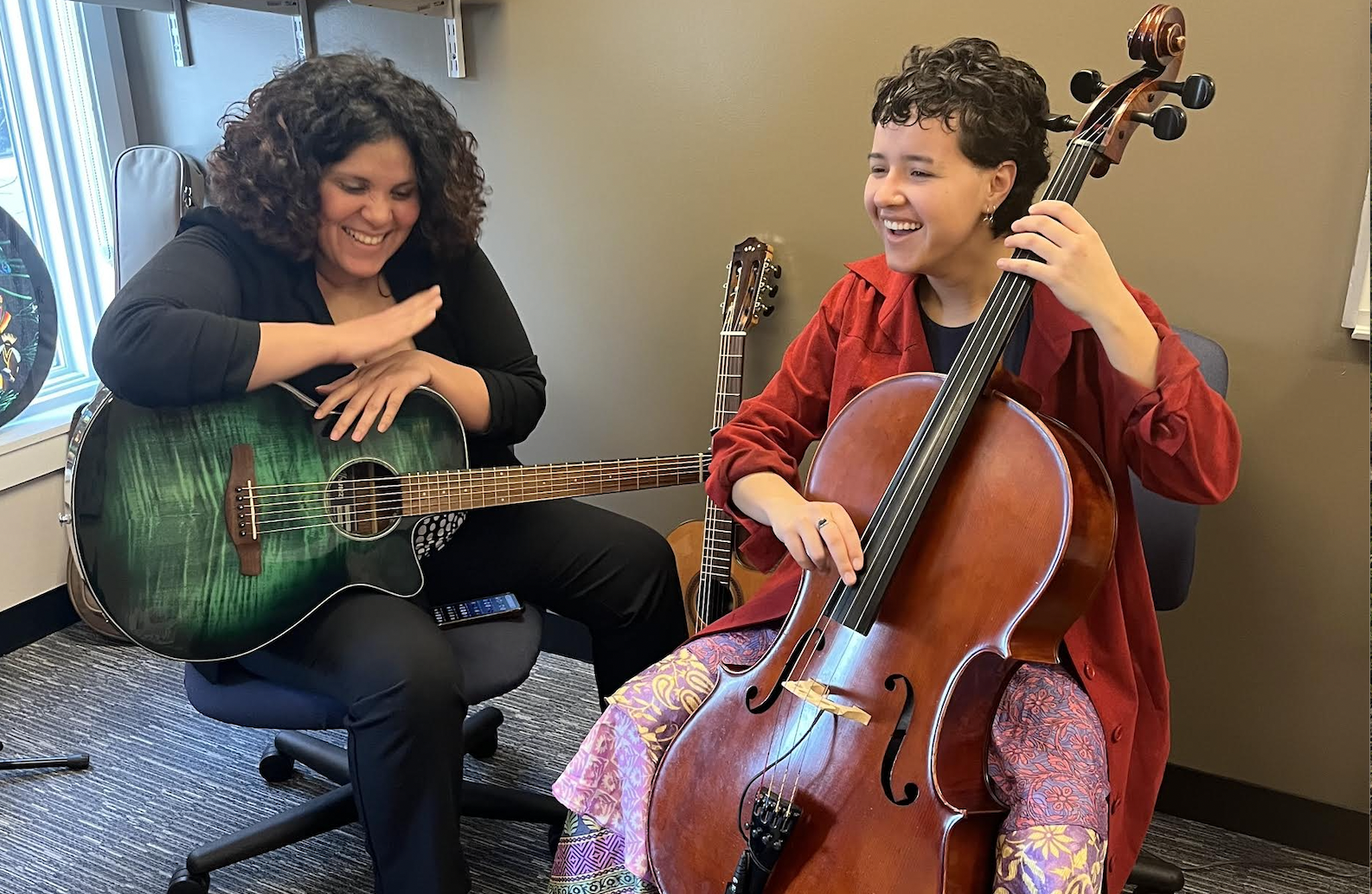
Music Therapy is one of twelve majors offered by Berklee whose mission is to educate, train, and develop students to excel in music as a career. Students in the Music Therapy program learn to apply music's enormous force to improve the quality of life in individuals with special needs including children and adults with disabilities.

The goals of the Music Therapy program are to:

  1. Enable students to integrate musical and interpersonal talents with the latest technology and a worldview of today's music;
  2. Build careers devoted to helping others achieve their goals regardless of their personal limitations or challenges;
  3. Train savvy professionals in an interdisciplinary clinical team which can serve people through the life cycle from infancy to older adulthood; and
  4. Apply the art and science of music therapy in assessing the effectiveness of therapeutic interventions.

What is Music Therapy?

Music therapy is the applied use of music to measurably improve people's lives by assisting them in making positive life changes. Music therapy is the functional and scientific application of music by a trained music therapist to enhance an individual's social, emotional, educational, and behavioral development. The music therapist is a credentialed, professional therapist and trained musician who generally functions as part of a treatment team in a medical, educational or community-based program. He or she may also work as a private practitioner in a variety of clinical settings by developing contractual arrangements with therapy providers in diverse human service agencies and schools.

Where Do Music Therapists Work?

Music therapists work in a variety of clinical settings including, but not limited to, psychiatric settings, general hospitals, skilled nursing and intermediate care homes, child and adolescent treatment centers, schools, and forensic and corrections centers. They are hired as music therapists, rehabilitation specialists, expressive arts therapists, recreation therapists, and even activity directors.

Who Becomes a Music Therapist?

IF YOU ARE…

  • a creative musician
  • a problem solver
  • an insightful helper
  • an empathetic listener
  • a keen observer
  • communicate verbally and musically

then… music therapy may be for you!

Does Being a Music Therapist Require a College Degree?

The music therapist studying in the United States must complete a degree in music therapy at an institution whose music therapy program is approved by the American Music Therapy Association (AMTA) including a clinical internship. The candidate must then pass the national examination offered by the Certification Board for Music Therapists.
The college offers an accredited baccalaureate degree in Music Therapy to talented musicians of any age who are interested in the study of contemporary music such as jazz, blues, popular music, rap and hiphop. The Berklee program is unique among music therapy training programs in that the musical center of the program is contemporary music and improvisation rather than classical music study. Students admitted to the Music Therapy major must demonstrate musical promise and a potential for working effectively with people using music as a therapeutic medium.
Student music therapists studying at Berklee come from all over the USA and many countries throughout the world. The student body is characteristically diverse, musical, creative, and academically capable. Students who prefer to "learn by doing" within the context of a sound academic base will excel in the Music Therapy program at the Berklee College of Music.

What is the Music Therapy Curriculum at Berklee?

Berklee's AMTA-approved curriculum combines the theory and practice of music therapy. It supports comprehensive training in the application of music therapy to children and adolescents with special needs, adults with psychiatric disorders, medical patients and older adults. Students enroll in five levels of supervised clinical practica in which they assist qualified music therapists from over 50 clinical settings in the metropolitan Boston area. These experiential placements include such highly respected facilities as Children's Hospital, Dana-Farber Cancer Institute, McLean Hospital, Judge Baker Children's Center, Franciscan Children's Hospital, Dimock Hospital, Massachusetts Hospital School, Boston and Cambridge Public Schools, Boston Housing Authority, and local nursing homes and assisted living facilities. Each practicum course is paired with an academic class that provides corresponding music therapy instruction in special education, clinical assessment and evaluation, research, psychotherapy, and medicine.
Other specialized courses include instruction in theory and technology behind music as therapy. The Introduction to International Music Therapy provides an overview of this unique field from the perspective of those shaping it. Psychology of Music tickles age-old questions like "Why do lullabies put us to sleep?" and "How can music distract us from pain?" Technology for Music Therapists includes faculty demonstration of state-of-the-art adaptive and medical hardware and its interface with music software. In addition, courses in Guitar, Keyboard, Percussion, Voice, Exceptional Children, Anatomy and Physiology, Abnormal Psychology, and Psychology of Aging are designed to support the development of the essential knowledge and practical skills required of the highly trained music therapist.
Anthropologist A.P. Merriam, a student of music in culture, in a text entitled, The Anthropology of Music (Northwestern University Press, l964, p.209), said of music "We wish to know not only what a thing is, but what it does, and how it does it." The Music Therapy curriculum at Berklee College of Music is the applied study of the intricacies of music, its meaning, and its applications to improving quality of life and promoting health and wellness. The curriculum further includes the study of research methodology designed to assisting students in identifying, understanding, and documenting the contributive role of music in medicine, education, and mental health care.

What are the Classes Like in the Music Therapy Major?

Courses in the Music Therapy curriculum at Berklee are taught by faculty members, each with teaching and practical experience in their particular area of expertise. Trained and credentialed music therapists also supervise experiential practicum courses. Class size for practicum and specialty courses within the Music Therapy major range from 8 to 12 students. Introductory lecture courses range from 20 to 30 students. Individual attention to students is a value of the Music Therapy faculty and Chair.

Who is Responsible for Teaching the Music Therapy Curriculum at the Berklee College of Music?

Chairs

  • 151_thumb

    Suzanne Hanser

    Title: Chair
    Department: Music Therapy

    "These days there's a lot of attention to New Age philosophies and approaches to life, and drumming circles have become very popular. People get a lot out of that, and for some it's a spiritual experience. They think that's music therapy. But music therapy is scientific in addition to being an artistic endeavor. It's really a structured and formulaic approach to meeting individual needs. . . . Music has to come so naturally to the therapist that he or she can be totally with the client and tuned in to what he or she needs at the moment, totally empathizing and understanding not only what the person's saying, but what they're feeling."

    "These days there's a lot of attention to New Age philosophies and approaches to life, and drumming circles have become very popular. People get a lot out of that, and for some it's a spiritual experience. They think that's music therapy. But music therapy is scientific in addition to being an artistic endeavor. It's really a structured and formulaic approach to meeting individual needs. Music therapy is the systematic approach to using music to meet the specific need of a person or group. Music has to come so naturally to the therapist that he or she can be totally with the client and tuned in to what he or she needs at the moment, totally empathizing and understanding not only what the person's saying, but what they're feeling.

    "I came here to establish a music therapy program that was state of the art. I knew that we could take advantage of research and impressive medical advances here in Boston, which has some of the finest hospitals. I also knew that Berklee itself was the finest institution training contemporary musicians."

    • B.Mus., M.Mus., Florida State University
    • Ed.D., Teachers College, Columbia University
    • Fellow in clinical gerontology, postdoctoral training, Stanford University School of Medicine
    • Received National Research Service Award from National Institute on Aging
    • Former professor and chair, University of the Pacific
    • Author of three books and numerous articles and book chapters on music therapy
    • Speaker at national and international conferences in psychiatry, psychology, education, music, gerontology, special education, and music therapy
    • Past president of the National Association for Music Therapy and World Federation of Music Therapy
    • Past program director of the Alzheimers Association, Greater San Francisco Bay area
    • Research Associate and Music Therapist, Dana-Farber Cancer Institute
    • "One of Eleven Bostons Changing the World" according to the Boston Globe
    • Faculty on continuing medical education courses at Harvard Medical School
    • Visiting research scholar at Brandeis University, Women Studies Research Center

Department Faculty

  • 551_thumb
    Photo by Phil Farnsworth

    Donna Chadwick

    Title: Associate Professor *
    Department: Music Therapy

    • B.M., Anna Maria College
    • M.S., Emerson College
    • Pianist and guitarist
    • Member of God, We're Good
    • Board Certified Music Therapist
    • Licensed Mental Health Counselor
    • Clinician in private practice: Music Therapy Clinical Services, Westford, MA
    • Specialty in Rett Syndrome, multiple disabilities, communication disorders
    • Former Director of Music Therapy, Emmanuel College, Boston
    • Former national treasurer and journal editorial board member, AAMT
    • Cofounder and 20 year board member, Massachusetts MT Alliance
    • Coauthor of Clinically Adapted Instruments for the Multiply Handicapped and author of the Arts Therapies chapter in Developmental-Behavioral Pediatrics, 3rd (1999) and 4th edition (2009)
    • Recordings include Songs at Twilight, Alzheimer's Ease
    • Clinician in the vidoes The Music Child, Music Therapy: Creative Treatment, and Music Therapy and Medicine: Partnerships in Care
    • Pianist for Greenfield, NH ensemble God, We're Good!
    • Speaker at national and international MT conferences
    * Part-time faculty member
  • 69_thumb

    Peggy Ann Codding

    Title: Professor
    Department: Music Therapy

    "In music therapy, where the client is the center, people will come with disabilities, with emotional issues, pain of a physical or psychological nature, or cognitive disabilities, and the therapist has to be able to meet whatever comes. To be able to improvise is a critical skill, and not all programs teach that. To mold the method to the client is central to the music at Berklee, and to be able to do that therapeutically is critical. As a result, our students are leaving here able to go out and write their own ticket. The internship programs really want our students. It's live music; it's based on improvisation; it's adaptable; and they love that."

    "Our students want to use music to change the world. They've often known somebody who's had a disability or is different. Or maybe they themselves had an accident or an illness. They've had personal experience with it, somehow, somewhere. I had a difficult childhood that led me to music therapy, and I also had an accident as an adult. I was already in the field at the time, but both of those things give me insight, I think, into what I do. I think my childhood experience gave me insight into perseverance, resilience. I think a lot of our students come in with such resilience. Somebody in their family or they themselves have conquered something, and they want to help others do the same. And I love that about them.

    "Some students come with classical training, but we're using more contemporary music and improvisation. So in music therapy, where the client is the center, people will come with disabilities, with emotional issues, pain of a physical or psychological nature, or cognitive disabilities, and the therapist has to be able to meet whatever comes. To be able to improvise is a critical skill, and not all programs teach that. To mold the method to the client is central to the music at Berklee, and to be able to do that therapeutically is critical. As a result, our students are leaving here able to go out and write their own ticket. The internship programs really want our students. It's live music; it's based on improvisation; it's adaptable; and they love that.

    "Students come in wanting to investigate certain areas, and we ask, 'How do you want to do that?' They start their own programs, they develop new ideas, and then take them out and teach others. And that's really exciting. That's the Berklee model: what do you want to do and how can we help you do it?"

    • B.M.E., Phillips University
    • M.M., Ph.D., Florida State University
    • Certified music therapist, American Music Therapy Association
    • Music education teacher certification, general music K-12
    • Special education certification/ visually impaired children
    • Former director of music therapy program at Ohio University
    • Specializes in music therapy in correctional facilities and visually impaired persons
    • Extensive clinical experience, course and workshop development, and presentations, research, and publications
    • Served on various committees and taskforces for the National Association for Music Therapy, as president of the Ohio Association for Music Therapy and as board member for the Arts Council for the State of Florida Division of Cultural Affairs
    • Served as consultant to the Ohio Department of Corrections and Rehabilitation
  • 152_thumb
    Photo by Phil Farnsworth

    Kathleen Howland

    Title: Professor *
    Department: Music Therapy

    "I think there's no higher use of our musical talents than the opportunity to reach somebody across the bridge of pathology; to reach an Alzheimer's patient, to shape the life of a person with autism, to reach somebody who is afraid or in pain. . . . To be able to reach a fetus who's still in the womb is a tremendous example of the power of music. It's a higher purpose for our music making than necessarily just gigs. I mean, I've been to concerts that have changed my life, concerts that have enriched my life tremendously. But to really be able to know how to wield and use that power for the higher good of humanity is a tremendous opportunity for us all."

    "I often say that music is like a diamond; it has many different facets, and I have been interested in studying all those different facets in a variety of ways. I'm very invested in neuroscience as a way of explaining what we do and what we see. So I look at anthropology, I look at neo-natology, I look in every direction I can, and I think that's reflected in the academic work I've chosen.

    "The summer between my freshmen and sophomore years [in college], I was working in a residential school for autistic people. Their muscianship absolutely blew me away; it still does. And yet, as a musician, I couldn't seem to bridge my world to theirs with music, but I knew music had power. I spent another year in my studies at conservatory and then somebody mentioned music therapy. I didn't know what it was, but I knew that's who I was. I was immediately drawn to that as my work, and I switched colleges before my junior year. I enrolled in a program that fed my needs to unharness music in service to others.

    "For me there's a continuous relationship between being a researcher, being a lecturer, being a performer, and being a clinician. They all feed one another. I'll see something clinically that sparks my interest, and then I wonder why this could be so. That's when I become a researcher. That researcher then becomes somebody who has something to share with others. And it just goes round and round.

    "I think there's no higher use of our musical talents than the opportunity to reach somebody across the bridge of pathology; to reach an Alzheimer's patient, to shape the life of a person with autism, to reach somebody who is afraid or in pain. . . . To be able to reach a fetus who's still in the womb is a tremendous example of the power of music. It's a higher purpose for our music making than necessarily just gigs. I mean, I've been to concerts that have changed my life, concerts that have enriched my life tremendously. But to really be able to know how to wield and use that power for the higher good of humanity is a tremendous opportunity for us all."

    • Ph.D., University of South Carolina
    • Baritone saxophone, clarinet player
    • Member of Gathering of Friends sax quartet
    • Performances with Taj Mahal, Les DeMerle, and Rosemary Clooney
    • Recordings include My Private Affair
    • Specialization in music and cognition
    • Licensed speech language pathologist
    * Part-time faculty member
  • Brian Jantz

    Title: Assistant Professor *
    Department: Music Therapy

    • B.M., Berklee College of Music, Music Therapy
    • Guitarist
    • Former staff music therapist at the Community Music Center of Boston and Bournewood Psychiatric Hospital Rehabilitation Department
    • Former director of music therapy for All-Newton Music School and Brookline Music School
    • Former private consultant at Boston College Campus School for over five years
    • Directed and managed large residential group home in Watertown, MA
    • Featured in Fox News, the Boston Herald, and Boston Parents Paper for his unique clinical use of music 

    * Part-time faculty member
  • 204_thumb

    Kimberly Khare

    Title: Assistant Professor *
    Department: Music Therapy

    "Our program is music centered, focused on helping each student develop professionally as a musician as well as develop as a music therapist. We're also relationship centered and we're client centered. We make the focus of the training understanding how to develop an appropriate clinical relationship with the client. We're talking about the student understanding not only different diagnoses and populations, but understanding the person who's diagnosed with said conditions."

    "Within the American Music Therapy Association, the New England region is the tiniest region, but it's mighty. We seem to collect the pioneers of the field, the visionaries, people who are the giants in the profession. We have many of those people within Massachusetts, and we have several of those people on faculty. There is a wealth of resources. We also have a wide range of people who've trained at different times, so we've got a historical record of how we've developed and changed the field. We've got diversity in the faculty: some of the leading researchers, some of the leading creators and visionaries, and many different styles. We're all hired because we are experts in what we provide.

    "Our program is music centered, focused on helping each student develop professionally as a musician as well as develop as a music therapist. We're also relationship centered and we're client centered. We make the focus of the training understanding how to develop an appropriate clinical relationship with the client. We're talking about the student understanding not only different diagnoses and populations, but understanding the person who's diagnosed with said conditions.

    "The training's hard. It's not for everybody. You could be the best musician, you could be the nicest, most caring person, and you might not make a good music therapist. There are qualities that you have to possess. Some of these qualities can be taught. Some of these qualities can be learned over time. Some are what you come with from your life experiences. And then there are things that you learn about yourself that you might have to change. You've got to be empathetic. You need a sense of humor. You need to be insightful. You need to have very strong, creative, flexible musicianship. You've got to have a firm foundation when it comes to melody, rhythm, harmony. It would be really great if you played guitar for a year before you showed up. And you've got to be able to use your voice. Not everybody's born a singer, but there's a difference between singing and clinically using your voice. And self-confidence, a sense of self-worth, is essential."

    • B.A., State University of New York
    • M.A., New York University
    • Certified Nordoff-Robbins music therapist, Nordoff-Robbins Center for Music Therapy
    • Publications include "The Supervision of Clinical Improvisation in Aesthetic Music Therapy, a Music-Centered Approach" in Music Therapy Supervision, edited by Michele Forinash, 2001
    • Teaches clinical improvisation
    • Provided workshops nationally on clinical guitar work, focusing especially on rhythmic and harmonic stability and creativity and how that impacts the clinical relationship
    • Noted for clinical songwriting abilities
    • Currently developing a “clinical music” curriculum
    • Has twice received the New England Region of the American Music Therapy Association Presidential Award for Excellence in Service and Development of Music Therapy, 2000 and 2006
    • Serves the New England Region of the American Music Therapy Association as a member of the executive board and newsletter editor
    • Guitarist and arranger for family band CONNECT 3, which provides music education, expression, and experience for family audiences, particularly serving families who have experienced special needs or life threatening illness
    • Director of music therapy for the Community Music Center of Boston for 12 years, a music therapy program that serves the Greater Boston Area and is a long-standing partner of Berklee
    * Part-time faculty member
  • 273_thumb
    Photo by Phil Farnsworth

    Michael Moniz

    Title: Associate Professor *
    Department: Music Therapy

    • B.M., Boston University
    • M.Ed., Bridgewater State College
    • Trombonist
    • Founder of Schoolhouse Music Services and MIDI Schoolhouse
    • Former public school music educator/administrator
    • Adjunct professor for Salem State College and Fitchburg State College
    • Consultant /technology trainer for the Massachusetts Elementary School Principals Association and the Northeast Consortium for Staff Development
    • Technology chair for the Massachusetts Music Educators Association
    • Instructor for the Technology Institute for Music Educators
    • Presented numerous music technology sessions at the Christa McAullife Technology Conference, the New England League of Middle Schools, the TI:ME National Conference, and the New England Band Directors Association, as well as state music educator conferences in Texas, Massachusetts, Georgia, Kansas, Pennsylvania, Rhode Island, Vermont, Maine, Connecticut, New York, and New Hampshire
    * Part-time faculty member
  • 424_thumb
    Photo by Bill Gallery

    Karen Wacks

    Title: Professor
    Department: Music Therapy

    "Any musician at Berklee—whether you're a therapist, performer, or educator—can learn to use their music for compassion. It can be customized for a child in a hospital, or it can be broader, where you're working with thousands of people at a concert. But how can you begin to really use your music to think of another person, to step outside of your own personal needs and issues, to be there? It just takes a little bit of awareness. What's different about what we do is that we learn to customize our music to meet the needs of an individual or a group, but anybody can get it. It's about consciously thinking about another person and how you can help."

    "Over the years teaching at Berklee, I have learned to appreciate the need for expanded cultural competency. Last year I traveled with eight students to Kenya. We worked in orphanages and met musicians from all over; we had master classes and learned about music from an East African context. I began to see that certainly the practice and theory of music therapy can be generalized to different areas, but what that trip really highlighted was the shared exchange and collective global connection. We had something to offer but also a lot to learn. The way music is used in Africa is a wonderful model for music therapy. We look at the elements of music—call and response, polyrhythm—and we look at community and how music is used to bring a community together. That's what we do in music therapy. So it was really great to reconnect with those roots. We as therapists end up working in hospitals and nursing homes with such a diverse group, so it's imperative that we begin to expand our own understanding of how music in other cultures is being used.

    "What we learn at Berklee is improvisation, and what we learn in music therapy is how to meet a client or patient in the moment. We say we are prepared to be unprepared. You need to rely on yourself, on the music. There were times in Africa when students would just be paired up spontaneously with children. In one orphanage there were two Berklee students who were working with a group of adolescent girls doing songwriting, and they wrote a song about Mother Nature and their lives. For some of the little kids, it was very interactive, singing songs, teaching songs, learning songs. It was life-affirming and life-changing.

    "Any musician at Berklee—whether you're a therapist, performer, or educator—can learn to use their music for compassion. It can be customized for a child in a hospital, or it can be broader, where you're working with thousands of people at a concert. But how can you begin to really use your music to think of another person, to step outside of your own personal needs and issues, to be there? It just takes a little bit of awareness. What's different about what we do is that we learn to customize our music to meet the needs of an individual or a group, but anybody can get it. It's about consciously thinking about another person and how you can help."

    • B.A., Northeastern University
    • Ed.M., Harvard University
    • Pianist and French horn player
    • Clinical training coordinator for the Music Therapy Department at Berklee (internship and practicum placements)
    • Cochair, Faculty Coalition for Music and Activism
    • Coauthor, book and manual,
    • Board-certified music therapist
    • Licensed mental health counselor, Massachusetts
    • Former president, New England Region, American Music Therapy Association
    • Cofounder, Massachusetts Music Therapy Alliance
    • Produced television documentaries with NAK Production Associates: In a Perfect World, The Artist’s Way at Work, and The Art and Science of Music Therapy at Berklee
    • Member, Berklee Faculty Brass Ensemble and local community orchestras
    • Member, Berklee Women’s Network (founder of second iteration)
  • 456_thumb
    Photo by Phil Farnsworth

    Julie Buras Zigo

    Title: Assistant Professor *
    Department: Music Therapy

    "At Berklee, the Music Therapy Department has developed a strong sense of community among the students and the faculty. Our students really support each other. To be successful, music therapy majors need to be totally committed to their musical development and their academic work. Over four semesters, music therapy majors have the opportunity to gain practical experience in community-based settings. Students work alongside a music therapist in special education, in nursing homes, and with clients in psychiatric and medical settings. In these practicum placements, students take beginning steps in their professional development."

    "I have been a music therapist for 27 years. For the last 23 of these, I have worked at Kennedy Day School, a program at Franciscan Hospital for Children in Brighton. The school provides educational and clinical services for children ages 3-22 who have multiple intensive special needs. They are students who have intellectual or cognitive disabilities and may also have physical disabilities and/or medical issues.

    "How do you use music in ways that will help a child be better at communicating? Music therapists use music to serve the needs of others. One significant way is to help people connect with other people. For a person who is unable to speak or is functioning at a pre-verbal level of development, music may be used to allow for 'conversation.' Using music in clinically directed ways may decrease the isolation often experienced by someone with significant disabilities. Music therapists facilitate these opportunities.

    "My first instrument is the flute, but in my music therapy work I rely on piano, guitar, and voice. There are many different ways to approach clinical work. Part of that is directed by the population you are working with. At the Kennedy Day School, a child might come into the music room vocalizing in a certain tonal center. That directs the key selection for the music that will be created. Someone else might have a rhythm expressed in a movement or a vocalization. Music is created from that particular moment in time."

    "At Berklee, the Music Therapy Department has developed a strong sense of community among the students and the faculty. Our students really support each other. To be successful, music therapy majors need to be totally committed to their musical development and their academic work. Over four semesters, music therapy majors have the opportunity to gain practical experience in community-based settings. Students work alongside a music therapist in special education, in nursing homes, and with clients in psychiatric and medical settings. In these practicum placements, students take beginning steps in their professional development."

    • B.A., Montclair State University
    • Flutist with CenterWinds and Paulist Center Musicians
    • Music therapist
    • Executive chair of the Massachusetts Music Therapy Alliance
    * Part-time faculty member

For further information about the Music Therapy Department, please e-mail musictherapy@berklee.edu or call (617) 747-8677.


IF YOU ARE HAVING PROBLEMS VIEWING ANY VIDEO, VISIT OUR ONLINE TECHNICAL HELP PAGE. All audio and video clips require QuickTime. To protect the rights of artists and performers, all clips are streamed, rather than downloadable.


[ Print-friendly Version ]