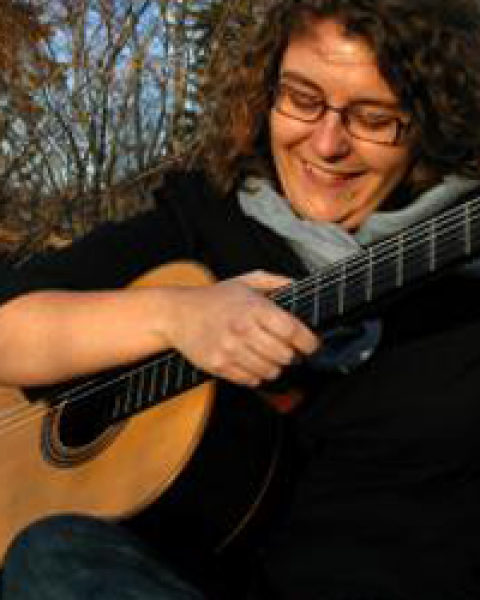
First-semester guitarist Molly Manarchy traveled to D.C. to do a master class with Grammy-winner Sharon Isbin and play for First Lady Michelle Obama. More
Wednesday, December 9, 2009, 7:00 p.m., Berk Recital Hall
Guitar Department
For you, music is not a hobby; it is going to be your career.
Many of the world's most successful guitarists began their careers at Berklee, such as John Abercrombie, Bruce Cockburn, Al DiMeola, Kevin Eubanks, Bill Frisell, Emily Remler, John Scofield, Steve Vai, and Mark Whitfield.
They came to Berklee because of who we are: the world's largest independent music school and the premier institution for the study of today's music.
The Guitar Department at Berklee offers you the most comprehensive guitar education to be found anywhere. We provide individualized instruction in both electric and acoustic guitar, allowing you to select either of these as your principal instrument. We offer you professional faculty who are specialists in each discipline, course work specifically designed to enhance your talents and abilities, and myriad playing opportunities.
We know how your instrument fits into today's music world, and we give it the respect it deserves. Whether electric or acoustic, the guitar is an extremely flexible and expressive instrument and can be effective in any musical style. Studying at a school that offers you all those musical styles is the most important way for you to take your playing and turn it into a career.
Studying Guitar at Berklee
At Berklee, you will find your own voice and develop your own style. You won't be limited to one direction. We encourage you to experiment with other styles that interest you, so that you can challenge yourself, improve your skills, and develop your instrumental craft. We will help you to become a guitarist with a strong musical identity.
Berklee prepares you for today's music by building on traditional aspects of learning. In all instruction offered in the Guitar Department, emphasis is placed on achieving a solid foundation in the standard technical challenges of professional performance, including scales, chords, reading, improvisation, interpretation, and standard repertoire. Also included is intensive training in sight-reading and in the understanding of chord voicing.
Private Lessons
In your first week at Berklee, you will be given a placement audition by a guitar faculty member, and one of the chairs of the department will match you with the teacher best suited to your needs for private instruction. Every student will take at least four semesters of private lessons and must pass a final exam at the end of each semester on the skills learned. (Music Education and Professional Music majors will take six semesters; Performance majors will take eight semesters, with extra Recital Preparation lessons before their senior jury and recital.)
Instrumental Labs
These specialized guitar classes bring together players of similar performance levels and provide training in specific aspects of guitar performance. Many of the teaching materials used in these labs are created by the very Berklee faculty who will be teaching you. In addition to the required labs Guitar Performance Skills and Guitar Style Skills (blues, funk, fusion, jazz, or rock), the elective labs include:
Advanced Guitar Performance Lab
Advanced Reading
Advanced Rock Guitar Performance Techniques
Blues Guitar
Building Guitar Technique through Triads
Country Guitar
Developmental Arpeggios
Electronic Effects for Guitar
Finger Picking Blues Guitar
George Benson Lab
Guitar Chord Soloing
Guitarmony
Guitar Synthesizer Lab
Jazz Blues Guitar
Jazz/Rock Improvisation for Guitar
Jazz/Rock Rhythm Guitar Playing
Jeff Beck Lab
Jim Hall Lab
Jimi Hendrix Lab
Linear Approach Concepts
The Linear Style of Pat Martino: Approaches to Jazz Improvisation
Performance Techniques and Comping
Polyrhythms
Professional Guitar Styles
Rock Guitar Lab
Show/Theater Guitar Lab
Slide Guitar Lab
Standard Tune Workshop
Steel Guitar Lab
Walking Bass Lines and Chords for Guitar
Wes Montgomery Lab
Course Work
The courses at Berklee are continually reviewed and evaluated so that they are up-to-date and consistently reflect today's musical environment. In classes such as Guitar Performance Styles, you will learn the history of your instrument, analyze its present-day challenges, and participate in an in-depth study of styles and techniques.
Ensembles
Through ensembles, you will hone essential performance skills and techniques. They help you to broaden your stylistic range, to expand your network of musical friends and colleagues, and to gain diverse group-playing experience.
Berklee offers an ensemble experience for every entering student. Based on your placement audition, you may be eligible for Contemporary Styles Ensemble, Guitar Performance Ensemble, or Rhythm Section Ensemble.
Ensembles are offered in multiple sections for varying levels of ability. You choose the group and style that appeal to you. Your eligibility is determined by ongoing auditions that measure your growth as a performer. This system enables you to move into higher level ensembles as you develop your skills.
More than 350 ensembles rehearse weekly at Berklee. These ensembles reflect nothing less than a full range of musical expression:
Art Blakey Ensemble
Avant-garde Ensemble
Berklee Recording Orchestra
Cannonball Adderley Ensemble
commercial pop/rock recording ensembles
Concert Choir
country music ensembles
funk bands
jazz ensembles
John Scofield Ensemble
Latin ensembles
rhythm and blues ensembles
rock ensembles
Stevie Ray Vaughan Ensemble
Thad Jones/Mel Lewis Ensemble
Thelonious Monk Ensemble
Wayne Shorter Ensemble
Wes Montgomery Ensemble
Yellowjackets Ensemble
Visiting Artists
Through our Visiting Artist Series, you will be exposed to valuable first-hand career insight from some of the finest performers, songwriters, film composers, music business experts, and music professionals from every sector of the industry. Visiting guitar professionals have included: John Abercrombie '67, Adrian Belew, Peter Bernstein, Hiram Bullock, Joe Diorio, Ronnie Earl, Nelson Faria, Tal Farlow, Robben Ford, Mick Goodrick '67, Rodney Jones, Mike Keneally, Steve Khan, Peter Leitch, Pat Martino, Pat Metheny, Ben Monder, Steve Morse, John Petrucci '86, Duke Robillard, John Scofield '73, Alex Skonik, Leni Stern '80, Mike Stern '75, Martin Taylor, Carl Verheyen, and Mark Whitfield '87.
Guitar Rooms
The Guitar Department has nearly 50 amplifier-equipped rooms for private or small ensemble instruction and rehearsal. In addition, there are larger group instruction rooms complete with audio-visual learning aids. MIDI equipment, compact disc players, digital phrase samplers, videotapes, and audio tapes are used extensively for performance analysis classes and musical accompaniment. Guitar Department performances and recitals are often videotaped for faculty and student analysis.
Guitar Faculty
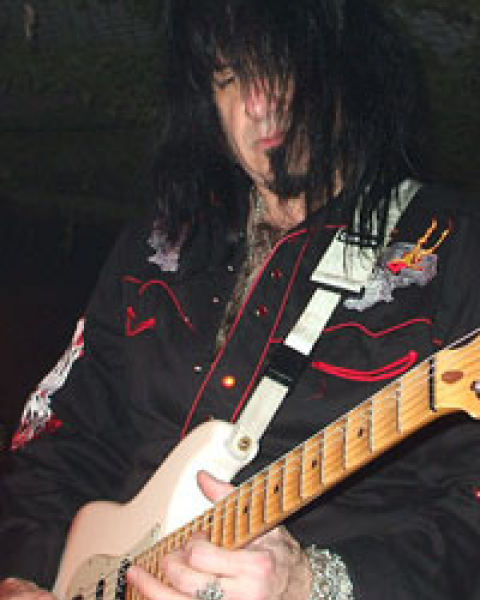
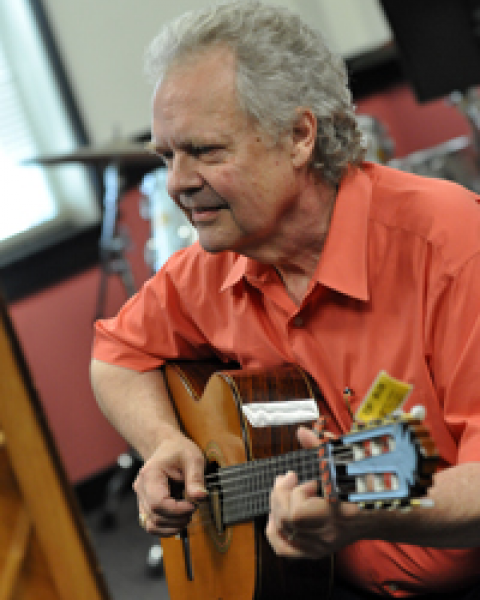
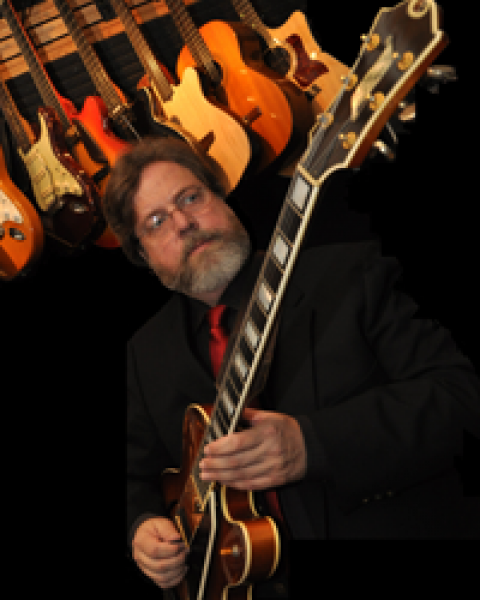
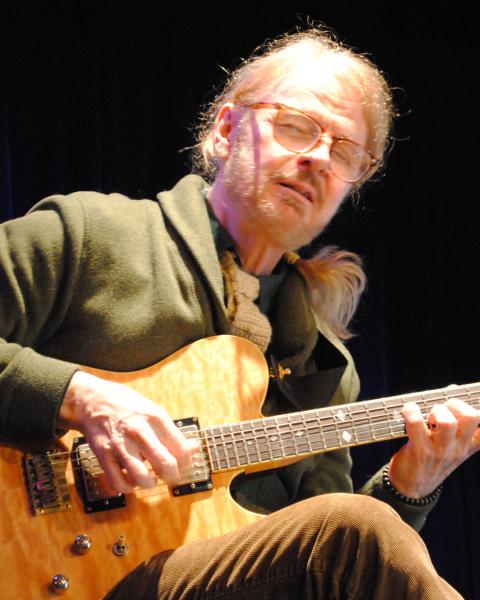
One-on-one faculty/student interaction is crucial to your Berklee education. In preparation for a career in the music industry, it is essential that you work intensively with men and women who have been living that career already. Berklee's guitar faculty are innovative educators as well as experienced professional musicians. Their expertise in contemporary guitar techniques and technology makes them invaluable as teachers.
Berklee has the largest guitar faculty in the world. The diversity of styles and experience of our faculty means you will be exposed to the best education possible. You need not be restricted to one teacher throughout your education. You can work with any number of faculty during your time at Berklee, giving you the ultimate educational experience.
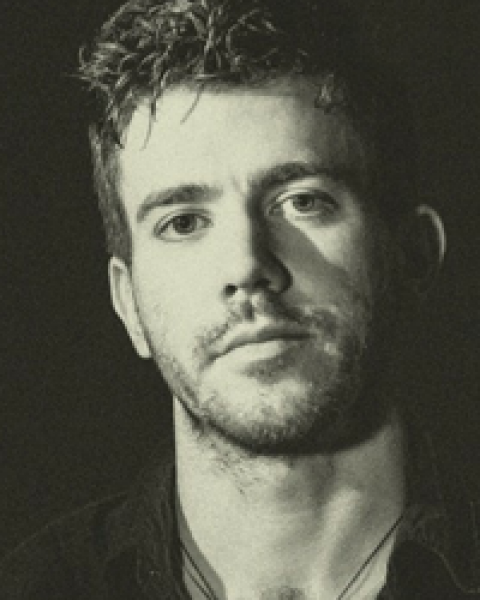
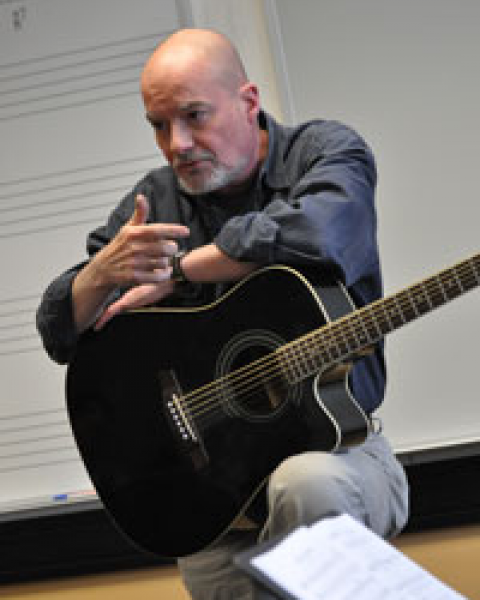
"In teaching private lessons, I help students find repertoire to work on and to study the essentials of phrasing, soloing, chords, and technique. The goal is for the student to be able to sound the way he or she would like to soundfor them to take their instrument in whatever direction they would like. I also teach a recital prep lab. In that case, the object is to gain experience playing in front of people and to discover what a good performance means to each individual student."
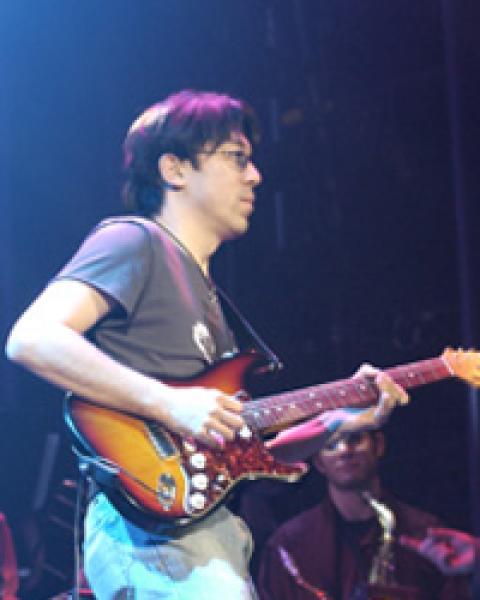
"Berklee offers so many good choices for a guitarist, not only in terms of teachers, but styles also. As chair, my goal has been to maintain a Guitar Department that covers the craft of playing the guitar in a diversity of styles. To that end, I've tried to build a faculty of all high-level performer/teachers. Students also learn a lot from being around 1,200 other guitarists.
"In teaching private lessons, I help students find repertoire to work on and to study the essentials of phrasing, soloing, chords, and technique. The goal is for the student to be able to sound the way he or she would like to soundfor them to take their instrument in whatever direction they would like. I also teach a recital prep lab. In that case, the object is to gain experience playing in front of people and to discover what a good performance means to each individual student.
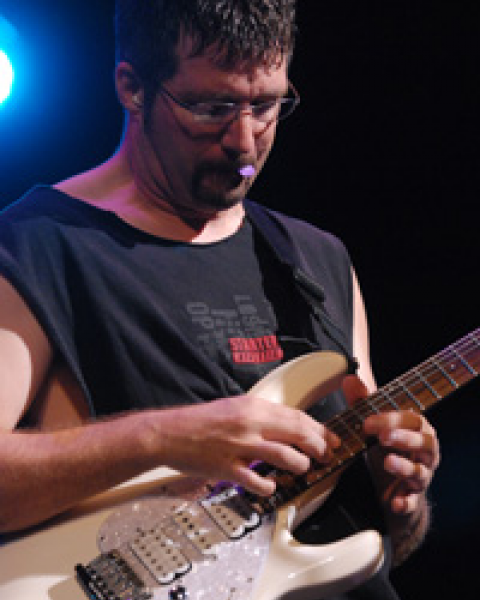
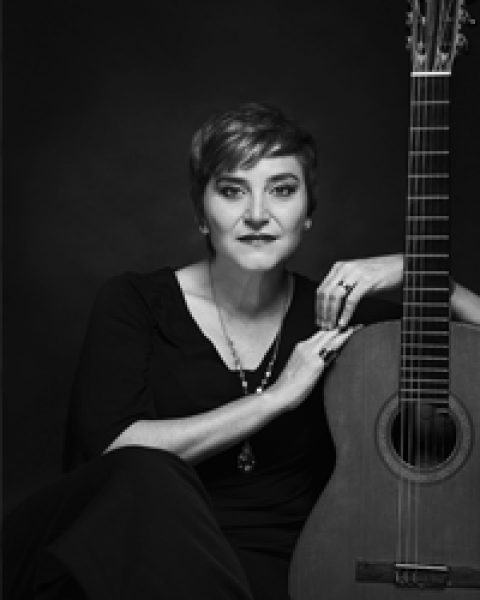
"I learn from the students, just as the students learn from me. I enjoy their individual talents, and I also enjoy the passion that the students have to learn the instrument and perform. Having a lot of experience as a performer, I'm able to relate my experiences to the students, and know what they're going through. The more I perform, the more I learnit gives me more material to work on with the students. Every time I perform, I learn something. And I'm able to talk about it firsthand."
B.M., Berklee College of Music
M.M., New England Conservatory of Music
Recipient of Down Beat Hall of Fame scholarship award
Principal guitar, U.S. Army Band, Washington, D.C.
Performances with numerous jazz, concert, and recording ensembles
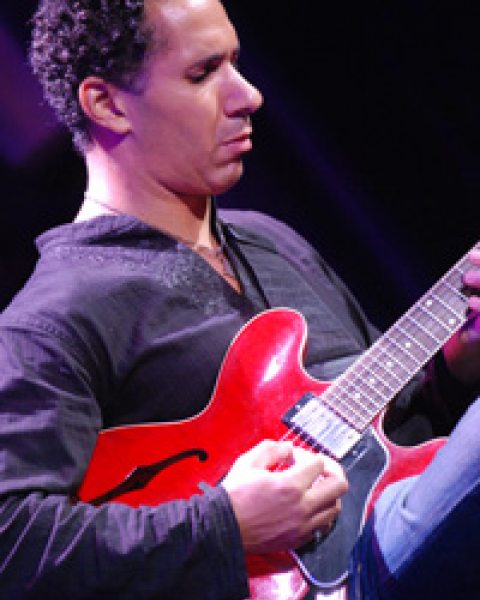
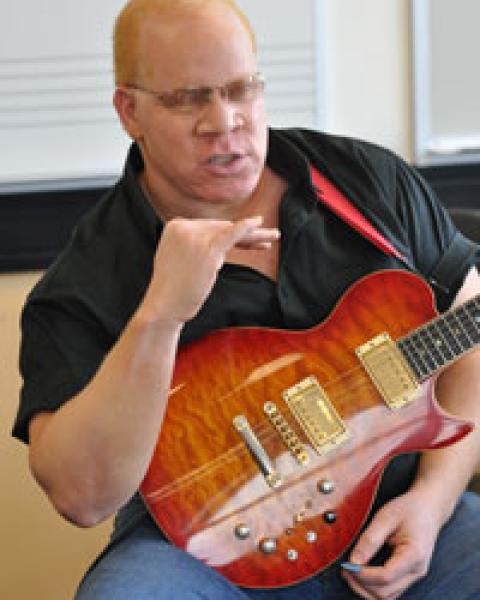
"To me the musician's responsibility is not only to get the sound out of your head and to the instrument, but actually into the mind of the listenerand there are a lot of things between your mind and the listener's. You need to know about sound production on your instrument, getting your sound recorded, and making that sound the best it can be.
"For the online course I teach for Berkleemusic.com, I had to work with them to come up with a whole new means of conveyance. It's a lot like trying to improvise animation. But to set up this educationally interactive showand then to have everybody file in from all over the world and to see it go as plannedwas amazing.
"I'm more inspired by playing now that I ever have been, and I've always felt that way throughout my life as a musician. And this inspiration sort of feeds on itself. I was just watching a video of Django Reinhardt playing in the early 1940s. It's incredible to see him play, and it just makes me want to play.
"I run into many people at Berklee who feel as if they never had a choice about going into a career in musicit's something that found them. It's as if it's been wired into your DNAthe work you do to improve doesn't even feel like 'work' in the same way that you don't worry about carrying your arms and legs around with you every day. It's a part of you, and you're just moving ahead."
B.M., Ohio State University
M.M.Ed., University of North Texas State
Internationally active jazz guitarist, composer, writer, and clinician
Frequent contributor to Down Beat and other magazines
Coauthor of Berklee textbooks for ear training and musicianship
Berklee was founded on two revolutionary ideas: that musicianship could be taught through the music of the time; and that our students need practical, professional skills for successful, sustainable music careers. While our bedrock philosophy has not changed, the music around us has and requires that we evolve with it.
For over half a century, we've demonstrated our commitment to this approach by wholeheartedly embracing change. We update our curriculum and technology to make them more relevant, and attract diverse students who reflect the multiplicity of influences in today's music. We prepare our students for a lifetime of professional and personal growth through the study of the arts, sciences, and humanities. And we are developing new initiatives to reach and influence an ever-widening audience.
More than a college, Berklee has become the world's singular learning lab for the music of todayand tomorrow. We are a microcosm of the music world, reflecting the interplay between music and culture; an environment where aspiring music professionals learn how to integrate new ideas, adapt to changing musical genres, and showcase their distinctive skills in an evolving community. We are at the center of a widening network of industry professionals who use their openness, virtuosity, and versatility to take music in surprising new directions.
Performance Facilities
The Berklee Performance Center, our largest facility, seats more than 1,200 and is constantly alive with student and faculty concerts sponsored by the college or professional performances sponsored by independent music producers. In addition, Berklee maintains four professional-quality recital halls for smaller concerts and gatherings. All in all, more than 600 performances take place each year at Berklee. As you progress musically, you are sure to be part of many of them.
Learning Resources
The Stan Getz Library offers an extensive collection of printed materials, audio and video recordings, and other instructional media for student use.
The Learning Center offers small-to-large group instruction rooms with Apple computer workstations. As a complement to the training sessions, the software is further discussed in ongoing forums that cover popular software and hardware topics and are led by faculty, Learning Center staff, upper-semester students, and software company representatives.
Studio and Lab Facilities
To prepare for careers in music, students work in studios, labs, and classrooms that emulate the conditions found in professional environments Students learn the fundamental and enduring qualities shared by great music and explore music technology applications in the most up-to-date educational facilities possible in contemporary music education.
The Recording Studio Complex consists of 13 professional production facilities, which include multitrack digital and analog recording capability, automated mixdown, digital audio editing, video postproduction, 5.1 multichannel surround mixing, and comprehensive signal processing equipment.
The Synthesis Labs feature more than 250 different types of synthesizers, standard and alternate controllers, effects processors, recorders, mixers, and software. Students receive hand-on instruction and supervised development time in areas of synthesizer programming, electronic composition/production, audio for visual media (games, film, television, interactive), sound design, software design, and performance.
The Performance Division Technology Lab is a five-station lab designed to support students' study of new electronic instrumental controller techniques. Featuring Apple/Macintosh computers, various synthesizer modules, and the latest in guitar, bass, keyboard, percussion, and woodwind, and brass MIDI controllers, the lab enables students to learn to adapt traditional playing techniques to complex electronic setup and control environments.
The Professional Writing Division Technology Lab consists of 12 digital audio/MIDI workstations.
The Film Scoring Labs offer students the opportunity for hands-on study in the areas of film music composition, conducting, MIDI sequencing, and digital music editing, with two lab/classrooms, a self-contained scoring-studio complex, a 40-seat theater/classroom, and two DAW/screening rooms.
Coming to Berklee
Special Annual Events Besides the regular activities and musical events that occur daily, once a year Berklee sets aside a time to showcase each instrumental department. Berklee Guitar Week, held during the spring semester, blends Berklee faculty clinics/concerts, student concerts, and major artist performances, clinics, and product demonstrations in a festive atmosphere. This may be an excellent time for you to come and take a look at what Berklee and the Guitar Department have to offer.
Berklee Summer Guitar Sessions In addition to Berklee's full-time program and other summer programs, we also feature the week-long Guitar Sessions during the month of August. We offer classes in guitar craft, guitar style, improvisation, and performance ensembles (blues, funk, fusion, jazz, and rock) at all levels.
For Further Information
For further information about the Guitar Department, contact Chair Larry Baione at 617 747-2294 or Assistant Chair Rick Peckham at 617 747-2511.
Berklee also offers campus tours and informational sessions throughout the year.
Complete application information can be found in the Berklee prospectus. Also available is information on the many scholarships available to outstanding student instrumentalists and vocalists. For a copy of the Berklee prospectus, or for further information about Berklee College of Music, contact the Office of Admissions at 800 BERKLEE (toll-free within the U.S. and Canada) or 617 747-2222.
Write to us at:
Office of Admissions
Berklee College of Music
1140 Boylston Street
Boston, Massachusetts 02215-3693
U.S.A.
Visit Admissions at:
921 Boylston Street, Suite 600
Boston, Massachusetts
Berklee College of Music does not discriminate on the basis of race, color, religion, gender, national origin, age, disability, military or veteran status, sexual orientation, genetic information, marital status, pregnancy, or any other characteristic protected by applicable law in employment or in admission to and participation in any of its programs and activities. Any inquiries or grievances may be directed to the Title IX Coordinator, the Vice President for Student Affairs/Dean of Students, Berklee College of Music, 1140 Boylston Street, Boston, Massachusetts 02215-3693, 617 747-2231, or to the Regional Director, Office of Civil Rights, U.S. Department of Education, Boston, Massachusetts.