News
-
A Berklee drummer finds a new groove in Athens. More
-
Richard Boulanger, Ruth Mendelson, David Zoffer, and Kevin Bleau's innovative projects use the latest music technologies. More
-
In school for a second time, Shenker's devoted his Berklee career not only to learning music but also to helping other students navigate the system. More
-
Through Berkleemusic.com, thousands of students are learning music production, writing, performance skills, and more from instructors who are miles away. More
-
Berklee faculty and students perform at Trinidad's steelpan and jazz festival and host a workshop for prospective students. More
Contemporary Writing and Production Department
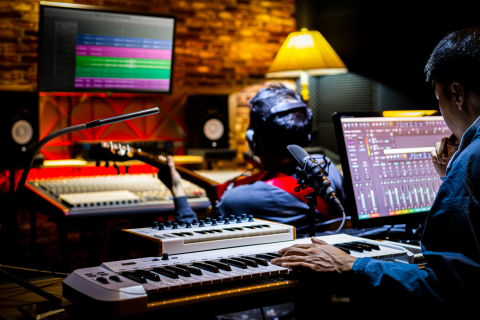
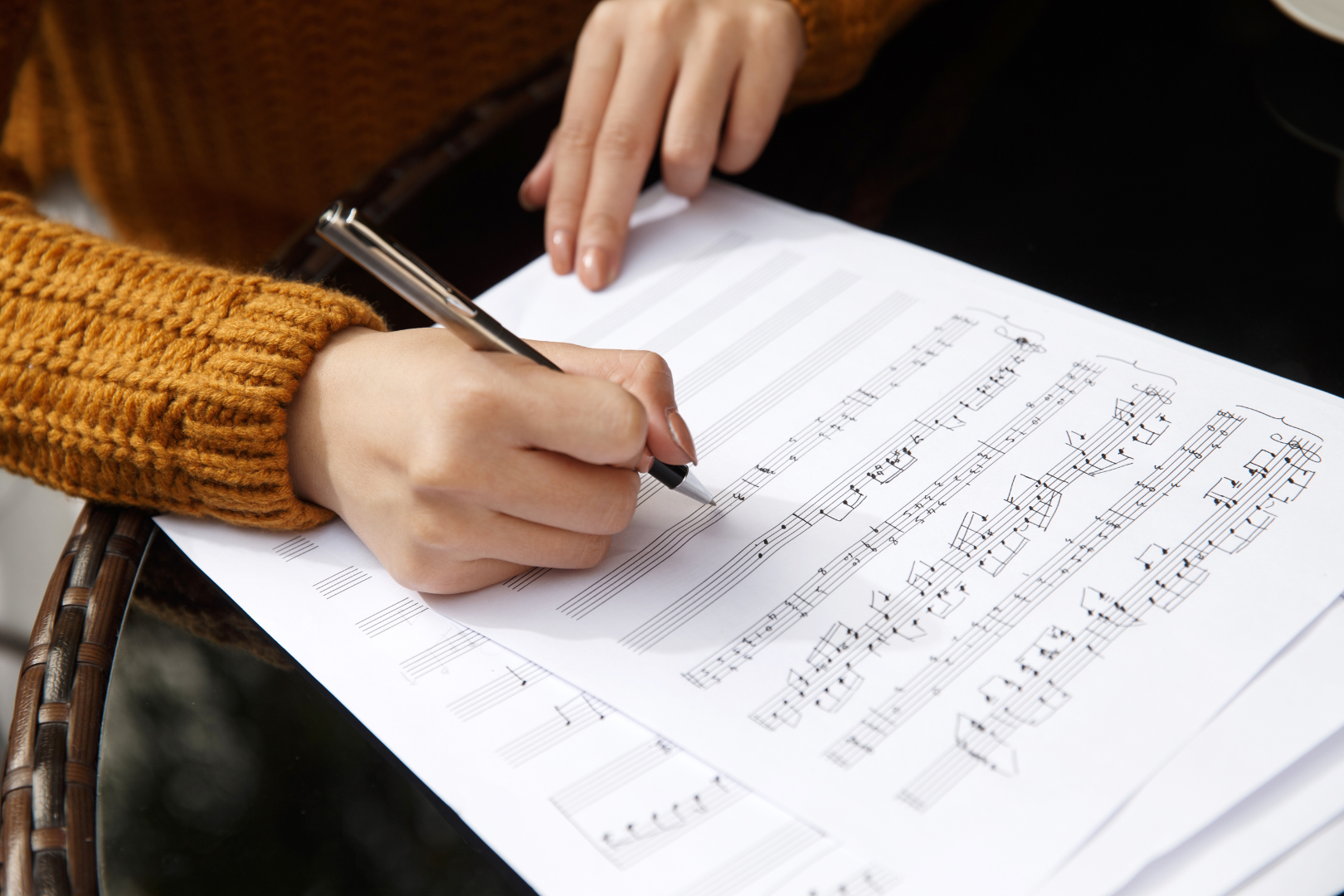
The Contemporary Writing and Production Department provides many opportunities to develop and improve your composition, arranging, and production skills.
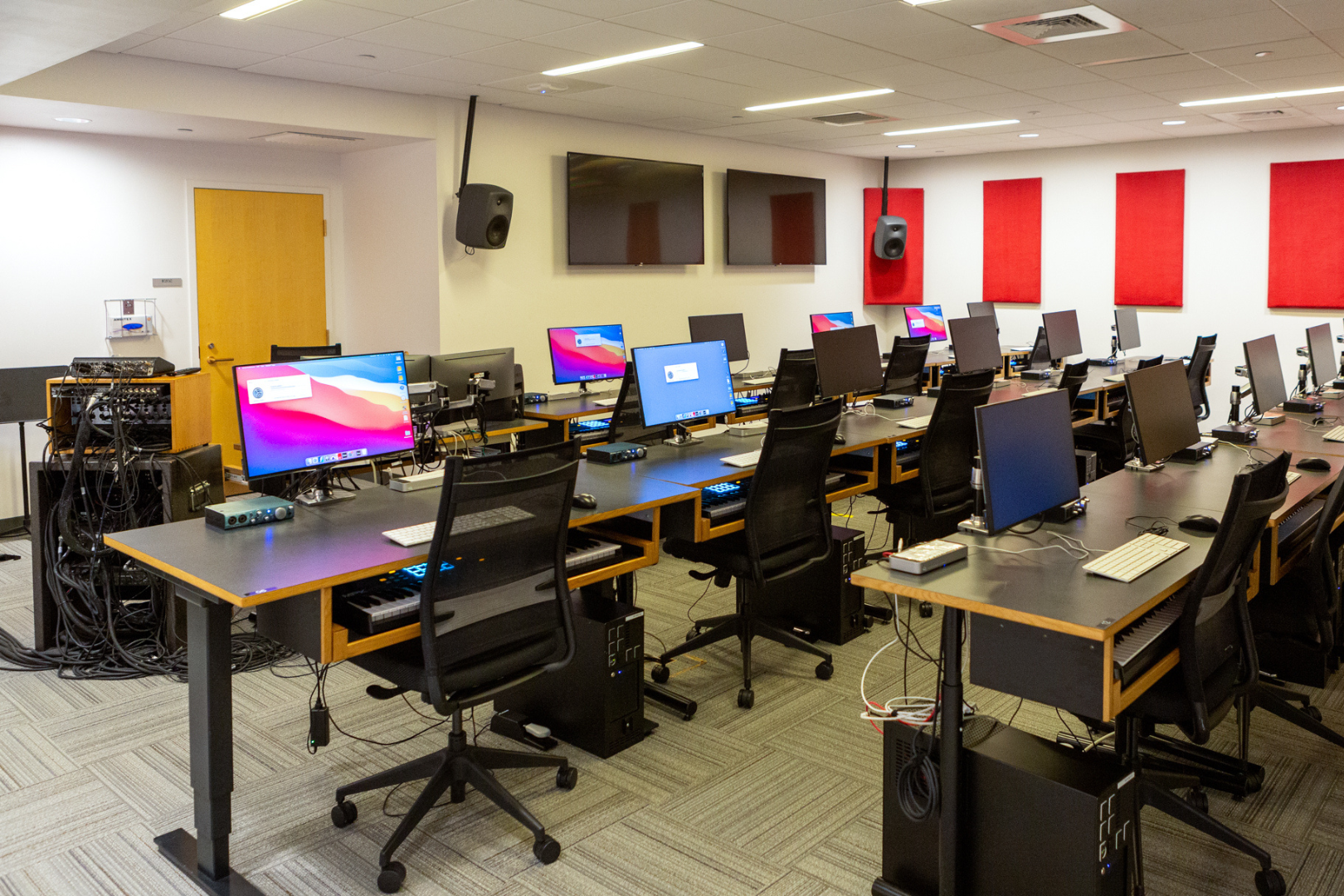
Apply those skills by writing for and overseeing the production of recordings using various combinations of instruments and vocals in acoustic and electronic settings. You'll work with a range of ensembles, from small workshop groups to orchestras. Whether these groups perform live or in recording studios, you'll have many opportunities to explore contemporary concepts and techniques of arranging and sound production, in both analog and digital domains. And you'll gain valuable experience using digital audio workstations, MIDI labs and your own portable laptop-based studio.
Learn how to recognize, analyze, and evaluate musical concepts of jazz, pop, rock, and other contemporary music idioms and style. Develop skills and knowledge to function as a professional writer, arranger, and producer under a wide variety of conditions and music industry environments.
Chairs
-
Matthew Nicholl
Title: Chair
Department: Contemporary Writing and Production
"I understand what skills a writer needs to survive, and those are what I try to teach. To make a living and have a high professional quality of life, one needs to be able to write good music quickly. In the Contemporary Writing and Production Department, we train students to deal with any situation they might encounter as professional writers. The curriculum is not focused on any particular style. Instead, we deal with typical situations in which writers may find themselves in the music industry, be it music for radio, TV, electronic games, or multimedia; arranging and production for live performance and recording; writing original music; or producing other artists."
"I encourage students to go beyond writing merely acceptable music. All the great writers I ever worked with were obsessed with writing the best possible music, and were never satisfied with just fulfilling the basic requirements. When a writer strives to write truly great, original music, their own voice emerges from the struggle.
"I understand what skills a writer needs to survive, and those are what I try to teach. To make a living and have a high professional quality of life, one needs to be able to write good music quickly. In the Contemporary Writing and Production Department, we train students to deal with any situation they might encounter as professional writers. The curriculum is not focused on any particular style. Instead, we deal with typical situations in which writers may find themselves in the music industry, be it music for radio, TV, electronic games, or multimedia; arranging and production for live performance and recording; writing original music; or producing other artists.
"When you write for a living, you must be very sensitive to what your clients are asking for. Most clients are not musicians and don't have a conventional musical vocabulary. Professional writers have to listen to what the client is saying and understand it musically, but be able to converse on the client's terms. An important part of what writers do is to win the trust of those who hire them.
"What I like about Berklee is how much it has to offer students. It's a big place, which sometimes can be difficult for students to navigate, but the motivated student can find everything he or she wants here. Berklee is the New York City of music schools: everything is here, someplace, sometime, if you can only find it."
- B.M., M.M, University of North Texas
- Composer of film scores for National Geographic Society, PBS, NASA, and Blue Cross/Blue Shield
- Composer and arranger of annual national promotional campaigns for PBS, 1986–1990
- Composer of scores for presidential, senate, congressional, and mayoral political campaigns, including candidates Bob Dole, Ronald Reagan, Michael Dukakis, George H.W. Bush, Marion Barry, and many others
- Recent publications include Music Notation: Preparing Scores and Parts (Berklee Press, 2007) and Bossa Nova Standard Songs (Rittor Music, 2007)
- Recordings include Windborne, Featuring the Dallas Brass, From Here to There (with Eliot Wadopian), and Silent Picture (with Michael Farquharson)
- Arranger and conductor for shows featuring Rosa Passos and Eva Ayllón
All-Time Great Ones
| |
High Life
Wayne Shorter
The best writing of the last 10 years.
|
| |
You Must Believe in Spring
Bill Evans
His best record, both as a whole and for the level of playing on each cut.
|
|
|
Para Todos
Chico Buarque
One of the best songwriters alive.
|
| |
Royal Scam
Steely Dan
Yeah, it's old, but what a great record.
|
| |
String Quartet #19 in C
Mozart
He actually edited and revised the set of quartets this one comes from. He was trying to impress Haydn. Probably the greatest post-Bach imitative counterpoint ever written.
|
-
Andrea Pejrolo
Title: Assistant Chair
Department: Contemporary Writing and Production
"At Berklee in general, and in our department especially, we strike the right path between the traditional composition and arranging techniques and the technological aspect of production. We teach the latest technology in terms of production, recording, and sequencing, but we also provide our students with the traditional orchestration techniques for acoustic ensembles, tools that are extremely valuable these days to any professional musician. I always strongly encourage my students to stay updated on new musical trends, new arranging techniques, new styles, and new technologies. Technology should be regarded as a tool to improve the quality of music and to help develop new musical idioms, but it is imperative for the student to sustain a balance that includes strong musicianship"
"At Berklee in general, and in our department especially, we strike the right path between the traditional composition and arranging techniques and the technological aspect of production. We teach the latest technology in terms of production, recording, and sequencing, but we also provide our students with the traditional orchestration techniques for acoustic ensembles, tools that are extremely valuable these days to any professional musician. I always strongly encourage my students to stay updated on new musical trends, new arranging techniques, new styles, and new technologies. Technology should be regarded as a tool to improve the quality of music and to help develop new musical idioms, but it is imperative for the student to sustain a balance that includes strong musicianship.
"I want my students to understand that in this business, they really need to be passionate about what they do. The life of a musician is an incredible journey, a rollercoaster, where highs and lows alternate and where the next turn may reveal unforeseen and exciting new events. My goal is to prepare students to enjoy every minute of that experience, to be ready when the next opportunity will arise, to realize that being a musician is an incredible gift that they can benefit from only if they have the right tools, knowledge, and flexibility to take advantage of it. My philosophy is 'Do as many things as you can, making sure that everything you are involved in is done well and with passion.' I think that's what makes the work so exciting.
"I want my students to be 100 percent focused on what we do and to really take advantage of everything that goes on in class. I like to be available for students if they need to see me during office hours. I always like to comment on every project in class. Also, I like to have the students commenting on their projects in class. The critique process is a very important one for me. Students learn not only from getting their projects critiqued by me, but they also learn from accepting constructive criticism from their peers. In fact, the entire process of commenting on other people's projects is an invaluable tool for learning about our own limitations and about areas that need improvement."
- Diploma, Manhattan School of Music
- M.A., University of Bristol
- Ph.D., New York University
- Performances at the Lincoln Center, Grand Canyon Music Festival, and American Contemporary Theater Festival, and on ABC and CBS
- Recordings include Links (2002), Three for Chet with pianist Harold Danko, Interesting Times, and Manhattan Moods
- Publications include Sequencing Techniques with Digital Performer, Logic Pro, CUBase SX, and Protools by Focal Press, and The Origins of Modal Jazz in the Music of Miles Davis in Bass World magazine
View all CWP Department faculty...
Contemporary Writing and Production Department Facilities and Resources
Every year the Professional Writing Division and Contemporary Writing and Production Department organize a series of faculty and student concerts, showcasing faculty and student compositions and arrangements.
CWP Student Concert excerpts
For further information about the Contemporary Writing and Production Department, please e-mail cwp@berklee.edu or call (617) 747-8629. Current students can visit berklee.net/wp for more information (login required).
[ Print-friendly Version ]
|