The Berklee Internet Radio Network: 1 Student Radio 2 Special Events 3 Alumni Programming 4 Famous Alumni Tracks 5 Berklee International

News

Events

Bass Department

For you, music is not a hobby; it is going to be your career.

Many of today's most successful bass players began their careers at Berklee—such as Jeff Andrews, Victor Bailey, Jeff Berlin, Dwayne Burno, Ira Coleman, Matt Garrison, Abraham Laboriel, Sr., Michael Manring, Wayne Pedziwater, and Neil Stubenhaus.

They came to Berklee because of who we are: the world's largest independent music school and the premier institution for the study of today's music.

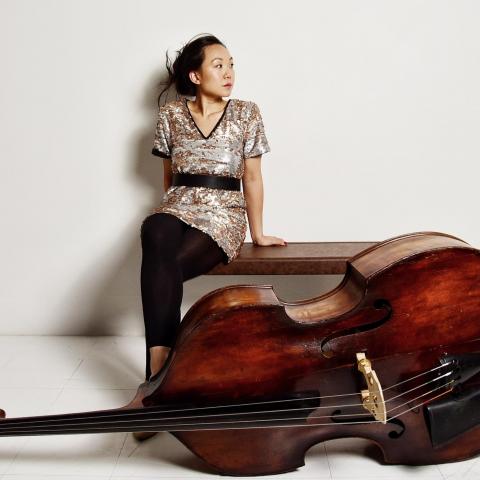
The Bass Department at Berklee offers you the most comprehensive bass education to be found anywhere. We provide individualized instruction in both electric bass and acoustic bass, allowing you to target either of these as your principal instrument. We offer you professional faculty who are specialists in each of these disciplines, course work specifically designed to enhance your talents and abilities, and myriad playing opportunities.

We also know how your instrument fits into today's music world, and we give it the respect it deserves. In earlier times, the bass was primarily a background instrument, relegated only to the rhythm section. While we respect this important role, we realize there is more to contemporary bass playing. Berklee was the first music school to recognize the electric bass as a real instrument and to realize the importance of taking it out of the background and putting it in the forefront. Whether acoustic or electric, fretless, 4- , 5- , or 6-string, the bass is an extremely flexible and expressive instrument and can be effective in any musical style. Studying at a school that offers you all those musical styles is the most important way for you to take your playing and turn it into a career.

Studying Bass at Berklee

At Berklee, you will find your own voice and develop your own style. You won't be limited to one direction. We encourage you to experiment with other styles that interest you, so that you can challenge yourself and improve your skills.

Berklee prepares you for today's music by building on traditional aspects of learning. In all instruction offered in the Bass Department, emphasis is placed on achieving a solid foundation in the standard technical challenges of professional performance. The physical approach (including hand, finger, bowing, and holding positions) is stressed as are theoretical studies involving scales, chords, arpeggios, and prepared repertoire.

Private Lessons

In your first week at Berklee, you will be auditioned by the bass faculty and placed with an instructor best suited to your levels and your needs for private individualized instruction. You will take at least four semesters of private lessons and must pass a final exam at the end of each semester on the skills you have learned. (Music Education and Professional Music majors will take six semesters; Performance majors will take eight semesters.)

Instrumental Labs

These group lessons bring together bass players of similar performance levels and provide training in specific aspects of bass performance. Many of the teaching materials used in these labs are created by the very Berklee faculty who will be teaching you. In addition to required lab subjects such as reading and bass line construction, the elective labs include:

  • Advanced Reading
  • Advanced Rhythmic Language
  • Arco Bass in the Jazz Idiom
  • Arco Workshop
  • Basic Timekeeping
  • Bass Blues Lab
  • Bass Performance Group
  • Doubling/MIDI Bass Controller
  • Electric Bass Pop Repertoire
  • Elementary Double Bass
  • The Evolution of Hip-Hop
  • Finger-style R&B/Fusion
  • 5- and 6-String Electric Bass
  • 5- and 6-String Electric Bass Chord Lab
  • Fundamentals of Electric Bass
  • Funk/Fusion Styles
  • Introduction to Latin Jazz Bass
  • John Coltrane Bass Lines
  • Latin Bass Lines
  • Motown/Atlantic Bass Styles
  • Orchestral Repertoire
  • Rock Bass Lab
  • Slap Technique for Electric Bass

Course Work

The courses at Berklee are continually reviewed and evaluated so as to be sure they are up-to-date and consistently reflect today's musical needs. In classes such as Survey of Bass Styles, Jazz Masters of Bass, Fundamentals of Improvisation for Bass, Bass in the Free Improvisation Idiom, Performance Ear Training for Bass, and Contemporary Electric Bass Styles, you will learn the history of your instrument, analyze its present-day challenges, and receive an in-depth study of styles and techniques.

Ensembles

Through ensembles, you will hone essential performance skills and techniques. They help you broaden your stylistic range, give you experience playing with a variety of groups, and expand your network of musical friends and colleagues. Ensembles are offered in multiple sections with varying levels of ability. You choose the group and style that appeals to you. Your eligibility is determined by ongoing auditions that measure your growth as a performer. This system enables you to move into higher level ensembles as you develop your skills.

More than 270 ensembles rehearse weekly at Berklee. These ensembles reflect nothing less than a full range of musical expression, including such groups as:

  • Buddy Rich Ensemble
  • Woody Herman Ensemble
  • Count Basie Ensemble
  • Wind Ensemble
  • Cannonball Adderley Ensemble
  • Art Blakey Ensemble
  • 8- and 9-piece jazz ensembles
  • Wayne Shorter Ensemble
  • Jazz/Rock Ensemble
  • Latin ensembles
  • funk bands
  • Berklee Recording Orchestra
  • Chord Scale Madness Ensemble
  • Avant-Garde Ensemble
  • commercial pop/rock recording ensembles

Visiting Artists

Through our Visiting Artist Series, you will be exposed to valuable first-hand career insight from some of the finest performers, songwriters, film composers, music business experts, and music professionals from every sector of the industry. Visiting bass professionals have included: Victor Bailey '79, Jeff Berlin '74, Ray Brown, John Clayton, Jimmy Earl, Mark Egan, Eddie Gomez, Charlie Haden, Marc Johnson, Abraham Laboriel, Sr. '72, Michael Manring '79, Christian McBride, Red Mitchell, Charnett Moffett, John Patittucci, Chuck Rainey, Billy Sheehan, T.M. Stevens, Slam Stewart, Neil Stubenhaus '75, Steve Swallow, Harvie Swartz '70, Buster Williams, Gary Willis, Rufus Reid, Matt Garrison and Victor Wooten.

Bass Rooms

The Bass Department has two large amplifier-equipped rooms for class/lab instruction and ten private lesson studios. Rooms are equipped with audio tape and compact disc players that are used extensively for listening/analysis and for play-along purposes. Bass Department recitals and senior final presentations are often videotaped for subsequent faculty and student analysis. We have developed the John Neves Library, an in-house collection of recordings.

Bass Faculty

One-on-one faculty/student interaction is a crucial element of your Berklee education. In preparation for a career in the music industry, it is essential that you work intensively with men and women who have been living that career already. Berklee's bass faculty are innovative educators as well as experienced professional musicians. Their expertise in contemporary bass techniques and technology makes them invaluable as teachers to you. Berklee also boasts one of the largest bass faculties in the world. The diversity of styles and experience of our faculty will give you exposure to the best education possible. You need not be restricted to one teacher throughout your education. You can work with any number of faculty during your time at Berklee, giving you the ultimate educational experience.

Chairs

  • 7_thumb

    Rich Appleman

    Title: Chair
    Department: Bass

    "It is important to have a balance of traditional skills and repertoire, while staying abreast of new changes and developments. This balance can be found in the curriculum for the four-, five-, and six-string electric bass, the fretless bass, and acoustic bass. Students learn concepts in Latin, funk, Motown, and hip-hop, while maintaining a foundation from earlier styles of jazz, rock, and fusion."

    "The hallmarks of a good bassist are good sound, good time, good ears, good bass lines, a good attitude, and the ability to play many styles. I've performed with the Navy Band, big bands, small jazz combos, vocalists, Broadway shows, and cabaret groups. Likewise, I want my students to be able to perform in many situations—which will help them in their careers.

    "As chair, my main goal is to provide a curriculum to students that will enable them to perform in today's music arena. This means having faculty that not only can play, but also can teach these skills through the right courses.

    "It is important to have a balance of traditional skills and repertoire, while staying abreast of new changes and developments. This balance can be found in the curriculum for the four-, five-, and six-string electric bass, the fretless bass, and acoustic bass. Students learn concepts in Latin, funk, Motown, and hip-hop, while maintaining a foundation from earlier styles of jazz, rock, and fusion.

    "Teaching private lessons, I start by focusing on instrumental skills, like sound and hand and body position, in addition to scales and arpeggios. After that, I focus on repertoire that balances reading, improvisation, and ear training. In a classroom situation, I focus on the history of the bass in different styles, with a focus on the importance of playing in a rhythm section first and soloing second.

    "Berklee offers bass students the opportunity to study with 30 bass faculty, a curriculum that includes both the acoustic and electric bass, and courses that embrace contemporary bass performance. Other benefits of studying at Berklee are the college's commitment to technology, the international and diverse makeup of the college, and the many performance opportunities for bassists."

    • B.M., Berklee College of Music
    • Performances with Lionel Hampton, Gregory Hines, the Fringe, the Boston Pops Orchestra, Slide Hampton with the Ryles Jazz Orchestra, Bernadette Peters at Symphony Hall, and the Boston Musical Theater in Moscow, St. Petersburg, Paris, and Brussels
    • Performances in theater productions of The Secret Garden, Ain't Misbehavin', A Chorus Line, Cats, Les Miserables, Grease, Kiss of the Spider Woman, Miss Saigon, Peter Pan, Menopause the Musical, and West Side Story
    • Active member of the International Society of Bassists and columnist for Bass Player magazine
    • Author of Contemporary Rhythm for Electric Bass and Chord Studies for Electric Bass (with Joseph Viola)
    • Numerous recordings, including radio and television jingles
  • 339_thumb

    John Repucci

    Title: Assistant Chair
    Department: Bass

    "I'm an equestrian, and we learn that the harder you ask a horse to do something, the less you're going to get from it. It's the same thing with the bass, which is a very physical instrument. The idea is not to overwork to get the sound you produce—it's how to get the most for the least."

    "Like every good Italian-American boy, I played the accordion. So one year when I was trying to fill up my class schedule, I went to the band director and asked if she needed an accordion player. She said no, they needed a bass player. She gave me a book and a bass, and said, 'Here, go read this book.' It was love at first sight. It just grabbed me.

    "I'm an equestrian, and we learn that the harder you ask a horse to do something, the less you're going to get from it. It's the same thing with the bass, which is a very physical instrument. The idea is not to overwork to get the sound you produce—it's how to get the most for the least.

    "I love sharing the idea that music comes from the internal voice, and the bass is one of many tools to reflect that inner voice—I have fun teaching that, and passing on my love of music and my passion for the bass. We stress the basics and the art of accompaniment, which is the heart of bass playing. But there's an incredible number of virtuosic younger players—a lot of students are drawn to that aspect of bass playing. So we prepare students not just to handle bass playing in ensembles, but also to handle the solo-playing aspects."

    • B.M.Ed., Lowell State College
    • Performances with Jim Hall, Milt Jackson, Urbie Green, Lionel Hampton, Helen Humes, Anita O'Day, Kenny Barron, Chris Connors, Morgana King, Ray Bryant, Terrence Blanchard, Norman Simmons, Lee Konitz, Arnett Cobb, Eddie "Cleanhead" Vinson, and others
    • Recordings include two CDs with the Paul Schmeling Trio, Stardust and One for the Road, and At Long Last with the Tony Lada/Larry Monroe Sextet
    • Bassist for Herb Pomeroy Band

View all Bass Department faculty...

Berklee College of Music

Berklee was founded on two revolutionary ideas: that musicianship could be taught through the music of the time; and that our students need practical, professional skills for successful, sustainable music careers. While our bedrock philosophy has not changed, the music around us has and requires that we evolve with it.

For over half a century, we've demonstrated our commitment to this approach by wholeheartedly embracing change. We update our curriculum and technology to make them more relevant, and attract diverse students who reflect the multiplicity of influences in today's music. We prepare our students for a lifetime of professional and personal growth through the study of the arts, sciences, and humanities. And we are developing new initiatives to reach and influence an ever-widening audience.

More than a college, Berklee has become the world's singular learning lab for the music of today—and tomorrow. We are a microcosm of the music world, reflecting the interplay between music and culture; an environment where aspiring music professionals learn how to integrate new ideas, adapt to changing musical genres, and showcase their distinctive skills in an evolving community. We are at the center of a widening network of industry professionals who use their openness, virtuosity, and versatility to take music in surprising new directions.


Performance Facilities

The Berklee Performance Center, our largest facility, seats more than 1,200 and is constantly alive with student and faculty concerts sponsored by the college or professional performances sponsored by independent music producers. In addition, Berklee maintains four professional-quality recital halls for smaller concerts and gatherings. All in all, more than 600 performances take place each year at Berklee. As you progress musically, you are sure to be part of many of them.

Learning Resources

The Stan Getz Library offers an extensive collection of printed materials, audio and video recordings, and other instructional media for student use.

The Career Development Center provides counselors to help students identify and assess their skills, locate information about specific music careers, expand and develop their career network, explore graduate school options, prepare a resumé and professional cover letter, discuss job search strategies, learn or refine interview and audition skills, and generally create a plan for mapping out their own unique career path.

The Learning Center offers small-to-large group instruction rooms with Apple computer workstations. As a complement to the training sessions, the software is further discussed in ongoing forums that cover popular software and hardware topics and are led by faculty, Learning Center staff, upper-semester students, and software company representatives.

Studio and Lab Facilities

To prepare for careers in music, students work in studios, labs, and classrooms that emulate the conditions found in professional environments Students learn the fundamental and enduring qualities shared by great music and explore music technology applications in the most up-to-date educational facilities possible in contemporary music education.

The Recording Studio Complex consists of 13 professional production facilities, which include multitrack digital and analog recording capability, automated mixdown, digital audio editing, video postproduction, 5.1 multichannel surround mixing, and comprehensive signal processing equipment.

The Synthesis Labs feature more than 250 different types of synthesizers, standard and alternate controllers, effects processors, recorders, mixers, and software. Students receive hand-on instruction and supervised development time in areas of synthesizer programming, electronic composition/production, audio for visual media (games, film, television, interactive), sound design, software design, and performance.

The Performance Division Technology Lab is a five-station lab designed to support students' study of new electronic instrumental controller techniques. Featuring Apple/Macintosh computers, various synthesizer modules, and the latest in guitar, bass, keyboard, percussion, and woodwind, and brass MIDI controllers, the lab enables students to learn to adapt traditional playing techniques to complex electronic setup and control environments.

The Professional Writing Division Technology Lab consists of 12 digital audio/MIDI workstations.

The Film Scoring Labs offer students the opportunity for hands-on study in the areas of film music composition, conducting, MIDI sequencing, and digital music editing, with two lab/classrooms, a self-contained scoring-studio complex, a 40-seat theater/classroom, and two DAW/screening rooms.

Coming to Berklee

Once a year, Berklee sets aside a week to showcase each instrumental department. Every October, the Bass Department features industry exhibits, equipment demonstrations, visiting artist clinics, and major concert events. Every two years, a major bass faculty concert is presented in the Berklee Performance Center, as well as an annual student bass concert. These may be excellent times for you to come and take a look at what Berklee and the Bass Department have to offer. In addition to Berklee's full-time course of study and other summer programs, we also feature the weekend-long summer Bass Lines program, held during the month of June.

For Further Information

For further information about the Bass Department, contact Chair Rich Appleman at rappleman@berklee.edu or 617 747-2281, or Assistant Chair John Repucci at jrepucci@berklee.edu or 617 747-2301.

Complete application information can be found in the Berklee prospectus. Also available is information on the many scholarships available to outstanding student instrumentalists and vocalists. For a copy of the Berklee prospectus, or for further information about Berklee College of Music, contact the Office of Admissions at 800 BERKLEE (toll-free within the U.S. and Canada) or 617 747-2222.

Write to us at:

Office of Admissions
Berklee College of Music
1140 Boylston Street
Boston, Massachusetts 02215-3693
U.S.A.

Visit Admissions at:

921 Boylston Street, Suite 600
Boston, Massachusetts

Email us at: admissions@berklee.edu

Berklee College of Music does not discriminate on the basis of race, color, religion, gender, national origin, age, disability, military or veteran status, sexual orientation, genetic information, marital status, pregnancy, or any other characteristic protected by applicable law in employment or in admission to and participation in any of its programs and activities. Any inquiries or grievances may be directed to the Title IX Coordinator, the Vice President for Student Affairs/Dean of Students, Berklee College of Music, 1140 Boylston Street, Boston, Massachusetts 02215-3693, 617 747-2231, or to the Regional Director, Office of Civil Rights, U.S. Department of Education, Boston, Massachusetts.


[ Print-friendly Version ]